What is dry tooling and why do you need to learn it?
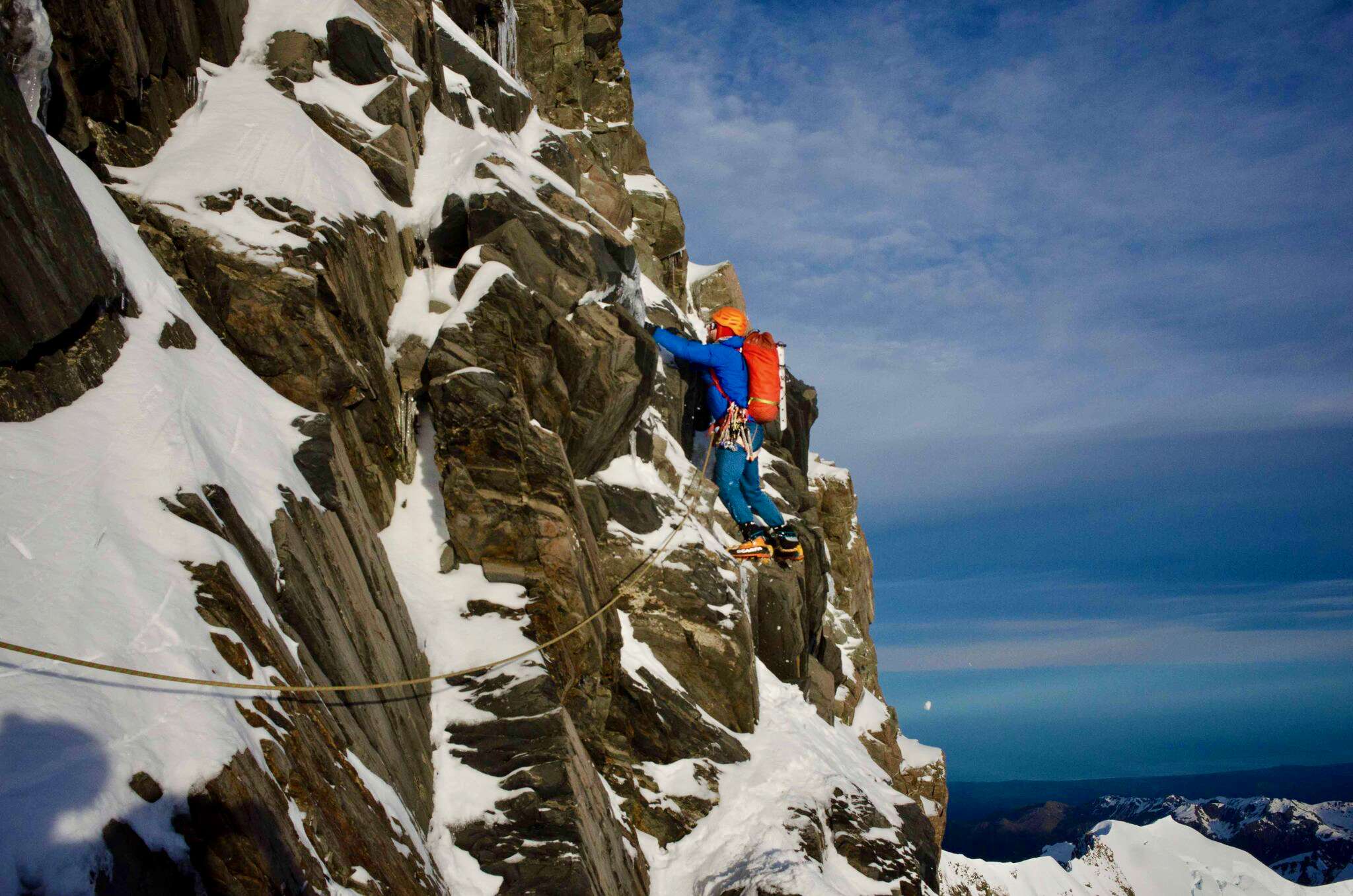
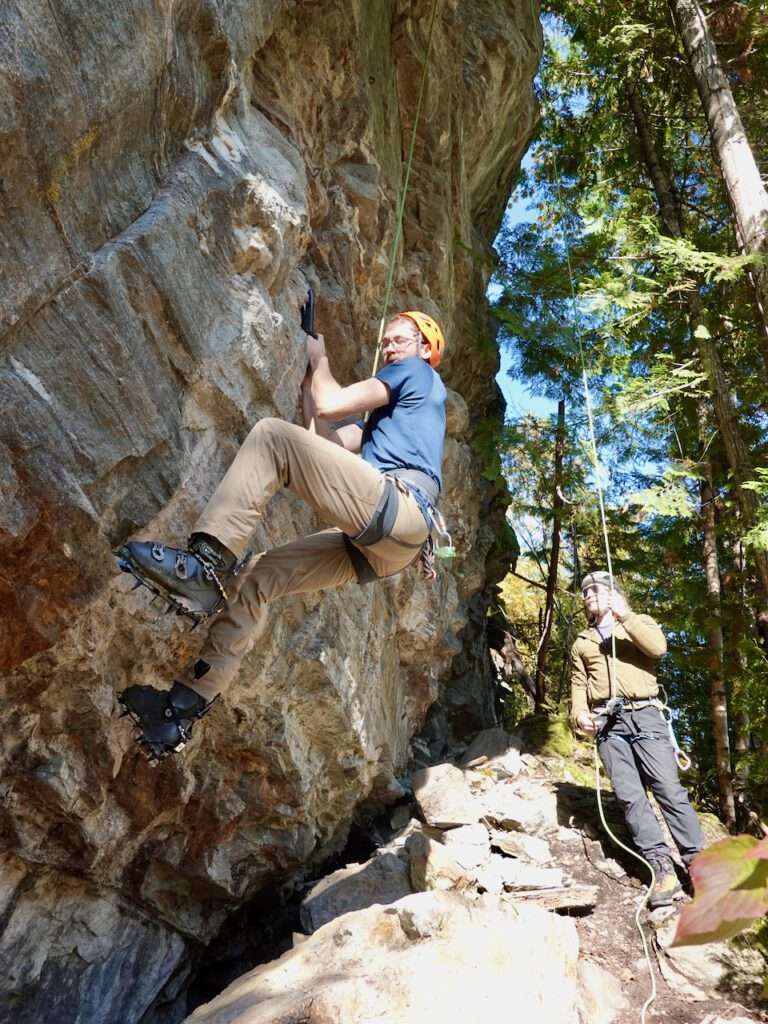
Dry tooling is climbing rock with crampons and axes. Sometimes rock is too cold or slippery to climb with rock shoes and hands, or it is interspersed with ice, making dry tooling the easiest and most efficient way to climb it. If you want to climb big mountaineering or ice routes, these skills often come in handy. Experience dry tooling can give you the confidence to get through sections efficiently that may be in difficult condition, sometimes even when ski mountaineering. The photo below shows such an occassion on a section that was warm and dry the week prior.
Location
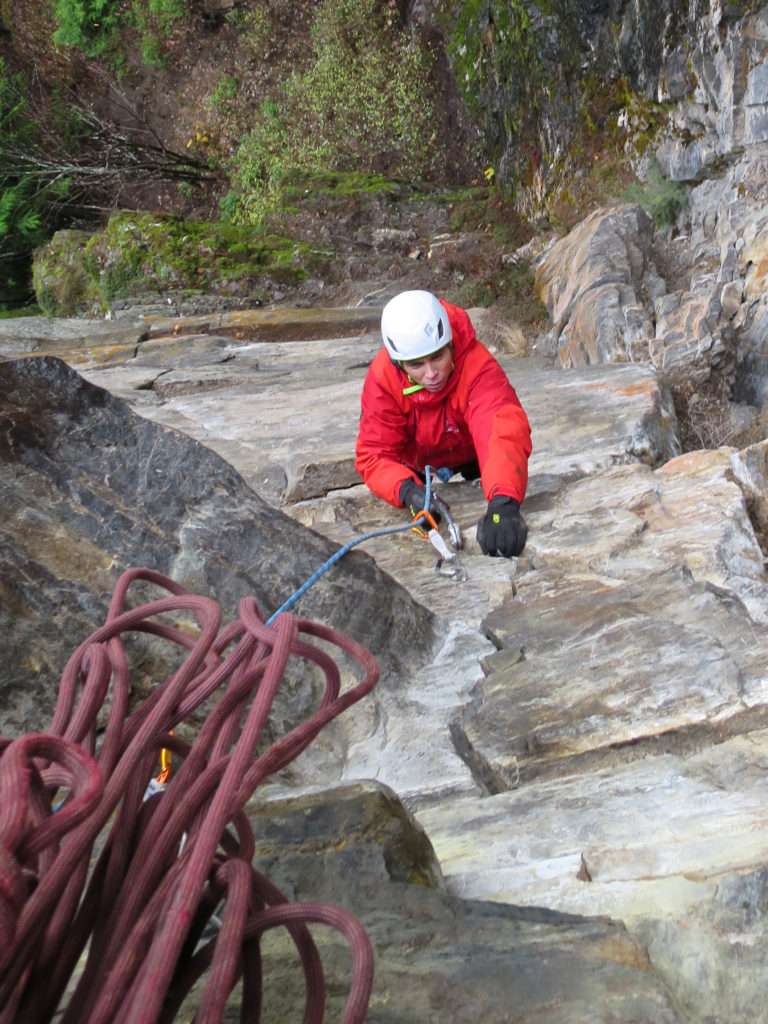
The Big Eddy Crag in Revelstoke was developed specifically for dry tooling, shown in the photo below.
Objectives
- Crag orientation and safety
- How to minimise the chances of hurting yourself with all the sharp things
- When and how to holster tools
- Footwork
- edging
- front pointing
- smearing
- Axe techniques
- hooking
- torquing
- stein pulls
- laybacks
- short tooling
- matching
- swapping

Prerequisites
- Experience lead and top rope belaying
- Experience climbing 5.10 in rock shoes
- Experience ice climbing
INTRO TO DRY TOOLING CLINIC
October 31st
10am - 4pm
2:1 ratio
$250 + 5% GST
Please make sure you have read through the booking conditions and completed the Registration Form before making a payment.
E-transfers are my preferred method of payment, otherwise please contact me for alternate methods of payment.
Equipment
We have Petzl Nomic tools and Dart crampons to demo. The crampons will require toe and heel welts on your boots.
Please bring the following equipment:
- Helmet
- Harness
- Ice clippers (optional)
- Boots with toe and heel welt (mountaineering boots are best, but ski boots will suffice)
- Crampons if you don't have heel and toe welts
- Belay device with locking carabiner
- Second locking carabiner
- Lunch and snacks
- Warm clothes
- Rain gear
- Climbing gloves (preferably multiple thin pairs such as mountain bike gloves)
- Belay gloves


Equipment